
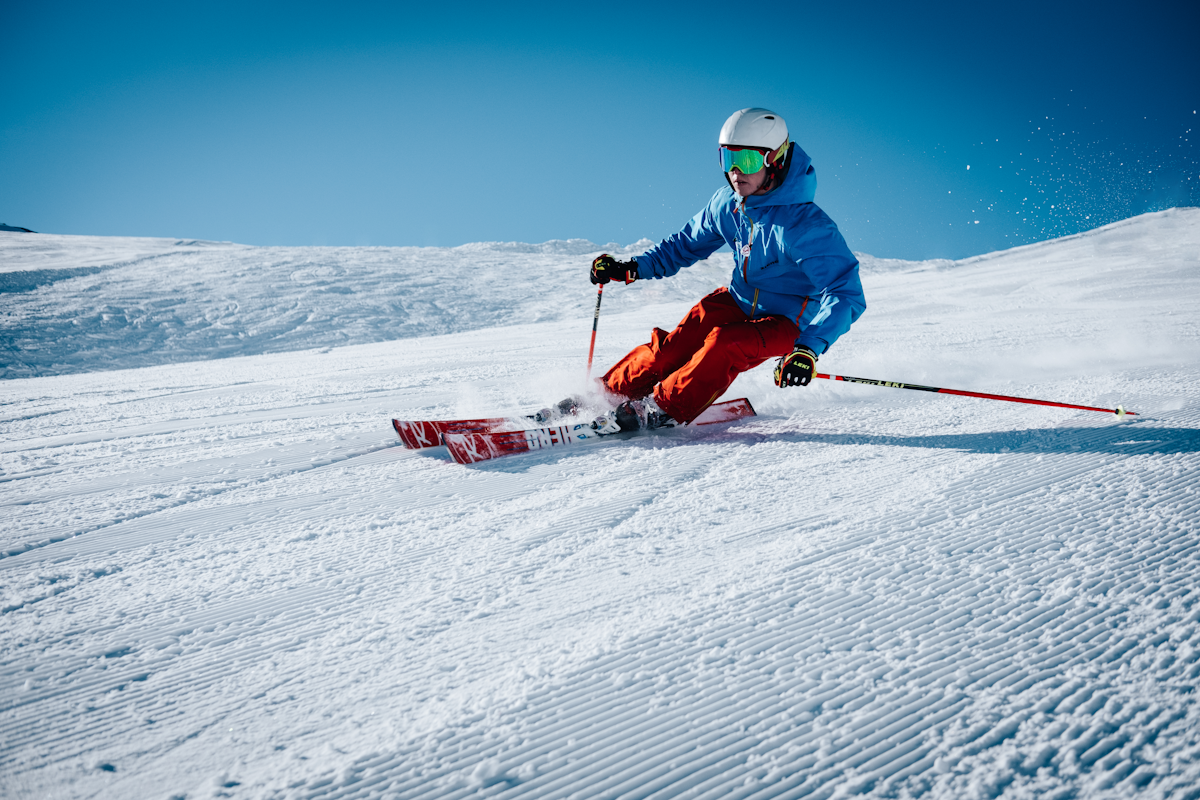
Flumserberg is a ski resort in the Northern Alps range, in Heidiland, Saint-Gall, Switzerland 🇨🇭. The ski area stretches over 65 km of runs between 665 m and 2,222 m, served by 17 lifts. Day lift pass €78 per adult.
* Price per adult for 1 day, public high-season rate. Reduced rates (online purchase, outside school holidays, families, children, seniors) are generally offered by the resort.
Run distribution is given as a percentage of kilometres for each difficulty level. Flumserberg overlooks Lake Walenstadt, facing the Churfirsten range, about an hour from Zurich. Its 65 km ski area, mainly red runs, is one of the busiest in eastern Switzerland.
- View over Lake Walenstadt
- Close to Zurich
- Varied ski area
Based on the resort's altitude and historical snow reliability
Built on a human scale, Flumserberg relies on the quality of its welcome and its closeness rather than on impressive figures. Its 65 km of runs suit a 3 to 4 day stay perfectly, especially for families or skiers who don't need to constantly change their playground. Flumserberg has kept the identity of an authentic mountain village, far from the concrete resorts of the 1970s. People come here for the clean air, the unspoiled landscapes and a friendly atmosphere that stands apart from the industrialised skiing of some large ski areas. Flumserberg's altitude (665 m at the base, 2,222 m at the top) helps it keep a decent snow cover in the middle of winter. January and February are the most reliable; in December and March, it's best to check conditions before finalising a booking. Budgeting for a stay in Flumserberg is clearly on the high side: €78 for a day lift pass, plus accommodation and mountain restaurants that are among the most expensive in the Alps. It's the price of excellence — but be aware of it before you go. In short: Flumserberg keeps its promises. A Northern Alps resort that will suit most profiles without disappointing.


Source: Open-Meteo.com · Data updated in real time
Above 2,000 m, snow is generally guaranteed from mid-December to late March. Real-time data: Open-Meteo (weather model). Monthly averages: estimates based on the resort's historical data.

